INNOVATION
TFI Marine's SeaSpring Clears DNV Certification
TFI Marine's SeaSpring polymer mooring system earns DNV certification, promising EUR 100M in savings on 500 MW floating wind projects
12 Jun 2026
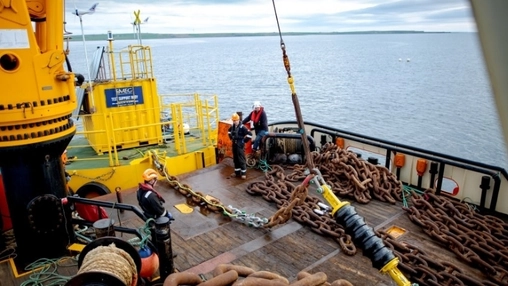
On 23 April 2026, a Norwegian certification body quietly validated a piece of rope. That DNV approval of TFI Marine's SeaSpring mooring system may prove more consequential than it first appears. Floating offshore wind has spent years promising cheap, deep-water power. The mooring lines that anchor turbines to the seabed have remained one of the last commercially stubborn problems.
SeaSpring swaps conventional steel for polymer materials, engineered to absorb the dynamic loads that the open ocean applies relentlessly to mooring infrastructure. Steel fatigues. Polymer, TFI Marine argues, does so more slowly and more predictably. Against a modelled 500 MW floating wind project, the company estimates savings of roughly EUR 100 million over a project's life, equivalent to a five-to-eight percentage-point reduction in levelized cost of electricity.
Those numbers, if they hold in the field, matter. Floating wind's commercial case has always rested on reaching sites where fixed-bottom turbines cannot go, particularly in waters deeper than 60 metres. Europe's Atlantic margins, Japan's volcanic shelf, and America's Pacific coast all fit that description. Yet each of those markets has been waiting, partly, for the mooring problem to be solved cheaply enough to justify deployment at scale.
Certification clears the immediate path. SeaSpring is now validated for use with 2.3 MW commercial turbines, meaning developers can proceed to installation without additional qualification rounds. Supply chain participants, from cable layers to port operators, stand to gain as project timelines shorten. The broader electricity consumer gains rather less visibly, through marginal reductions in generation cost that aggregate across national grids over decades.
The industry's excitement is understandable. Caution is also warranted. Certified performance in modelled conditions and actual performance across years of storm cycles are different things. The offshore sector has seen promising technologies validated on paper and tested harshly at sea. TFI Marine's SeaSpring has cleared a necessary gate. Whether it proves sufficient is a question the North Atlantic will eventually answer.
Related News


SUBSCRIBE FOR UPDATES
By submitting, you agree to receive email communications from the event organizers, including upcoming promotions and discounted tickets, news, and access to related events.